Fish with beer — a traditional snack, but the choice is wider than it seems, and behind the habit of “roach with a lager” lies perfectly understandable gastronomy. Dried, salted fish, fish snacks and smoked fish offer different flavours and pair differently with light or dark beer. We explain why fish goes so well with beer, which fish suits it best, how to tell dried from sun-dried, how to choose quality and how much salt this adds to the diet. Advice from the brand “Triton”, a fish producer since 1993. This is general reference information, not medical advice.
Why fish pairs so well with beer
The combination of salted fish and beer is not only tradition but also simple sensory science. First, salt suppresses the perception of bitterness: sodium ions reduce the sense of bitter notes, so salted fish softens the hoppy bitterness of beer and makes the taste more balanced (this is a documented effect in taste research). Second, the carbonation of beer and its hoppy bitterness do a good job of “cutting” fat and cleansing the palate after a fatty piece of fish. That is why delicate, lightly salted fish is better matched with a light lager that does not overpower it, while fatty smoked fish goes with a denser dark beer or porter. These rules are culinary logic rather than a strict law, so the final reference point is always your own taste.
Which fish suits beer
Four main groups of fish suit beer, and each has its own character: dried, salted, fish snacks and smoked. The choice depends on which beer you drink and which flavour you like — from salted, dense dried fish to fatty, smoky smoked fish.
Dried fish
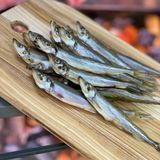
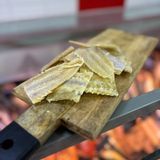
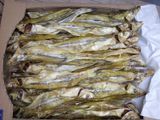
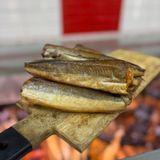
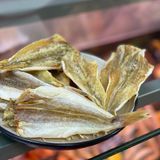
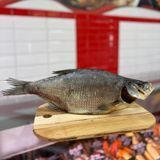
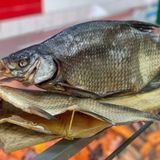
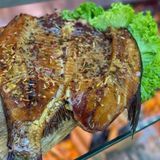
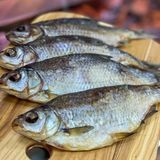
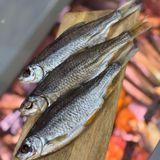
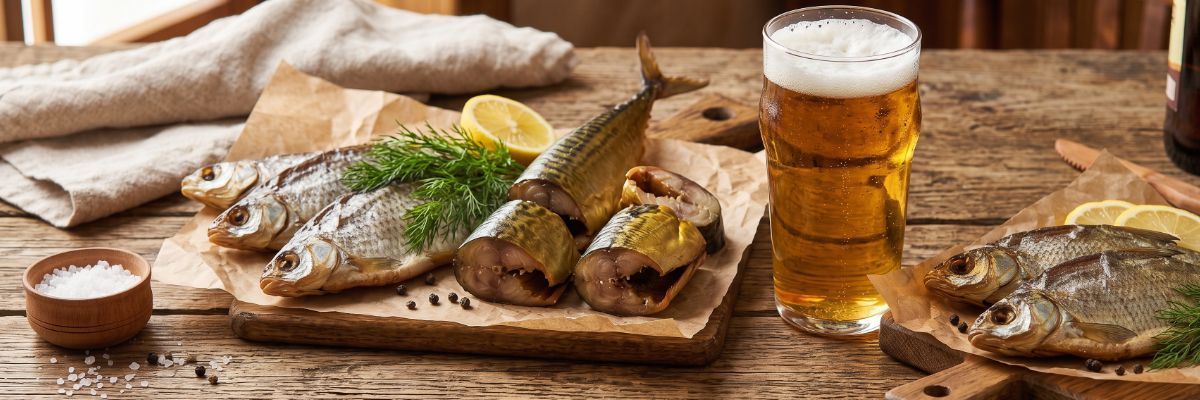
A classic with beer. Dense, salty, with a rich flavour, it holds its shape well and is convenient to eat by hand. In the catalogue this includes goby, roach, bream, blue bream and rudd. Briefly about the species: goby — this is mainly the round goby (Neogobius melanostomus) of the goby family, a bottom-dwelling fish of the Black and Azov Seas; roach (taran and vobla) — these are forms of roach of the genus Rutilus, the very “classic” dried fish for beer; bream (Abramis brama) — dense and meaty; blue bream (Ballerus ballerus) and rudd (Scardinius erythrophthalmus) — smaller, but also valued. Dried fish pairs best with light beer and lager. See the section dried fish.
Salted and small fish
More delicate than dried, saltier, eaten quickly. Herring, sprat, anchovy, Baltic herring, salted mackerel, iwashi. Sprat (European sprat, Sprattus sprattus) and anchovy (European anchovy, Engraulis encrasicolus) — a budget classic with light and wheat beer. An interesting detail: the salted “herring” on the shelf is usually Atlantic herring (Clupea harengus), whereas the Black Sea and Azov “herrings” are biologically closer to the shads of the genus Alosa. Baltic herring is a Baltic form of Atlantic herring, smaller and less fatty. All of this is the section salted fish.
Fish snacks
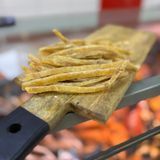
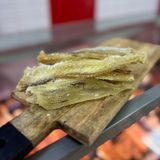
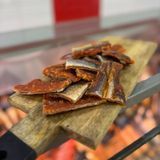
Dry, concentrated snacks that keep for a long time and need no preparation: fish strips, roach strips, squid (rings, shreds), dried shrimp, anchovy. Worth a separate mention is smelt (Osmerus eperlanus) — a small fish with a characteristic fresh “cucumber” aroma. Snacks suit any beer. This is the section fish snacks.
Smoked fish with beer
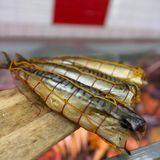
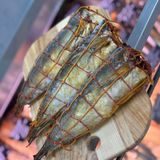
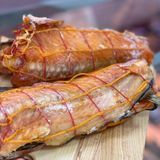
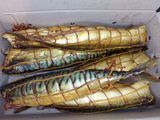
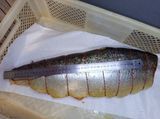
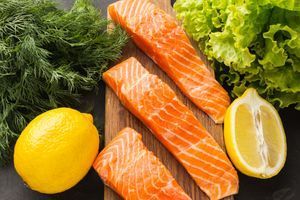
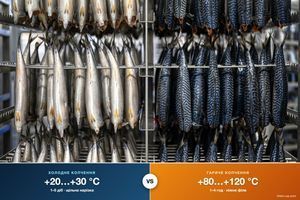
For dark beer it is better to take fattier smoked fish: hot-smoked mackerel, Baltic herring, cold-smoked salmon. The smoky flavour is well set off by a dense dark beer, porter or stout — smoked salmon is generally considered a classic pairing with porter. It is worth remembering the difference between the methods: cold smoking takes place at a low temperature and the fish is effectively not “cooked”, while hot smoking happens at a high temperature, when the fish is baked in the smoke; because of this, fat content, texture and shelf life differ noticeably. More detail — in the article on cold and hot smoking.
Dried, sun-dried or salted: what is the difference
All these methods share one thing: salt and drying extend shelf life because they lower the so-called water activity — the amount of “free” moisture that microbes need to grow. In fresh fish, water activity is very high (roughly 0.95–0.99), so it spoils quickly; in well-dried fish this figure drops, and the product becomes shelf-stable. Salt also acts osmotically: it draws water out of both the fish tissue and the cells of microorganisms. As a rough guide, already at a salt content of about 6–10% in the tissue, most spoilage bacteria are suppressed, and well-dried fish becomes so stable that it keeps for a long time even without refrigeration. That is precisely why dried and salted fish have historically been a snack you could keep in reserve.
The difference lies in the depth of processing. Salting — this is primarily curing in salt. Drying (cold air-curing) — this is salting followed by slow cold air-drying and maturing, during which enzymes break down proteins and fats into aromatic compounds; that is why dried fish stays slightly soft, retains its fat and has a rich flavour. Sun-drying goes further: the fish becomes drier and harder. For beer, it is most often the dried fish that is chosen — for its balance of flavour, fat and texture.
Which fish for which beer: a table
| Type of fish | Flavour | Which beer | Examples |
|---|---|---|---|
| Dried | salty, dense | light, lager | goby, roach, bream, blue bream |
| Salted / small | salty, delicate | light, wheat | herring, sprat, anchovy |
| Fish snacks | dry, concentrated | any | strips, squid, shrimp |
| Smoked | smoky, fatty | dark, porter | hot-smoked mackerel, Baltic herring, cold-smoked salmon |
How to match fish to a beer style
If you want to be more precise, take your cue from the beer style:
- Light, lager, pilsner. Light and clean, so they do not overpower delicate fish: goby, roach, sprat, lightly salted fish.
- Wheat (weizen, witbier). Highly carbonated, it “cuts” fat well — a classic pairing with fattier fish: herring, mackerel, sardines.
- Hoppy (IPA, APA). Pronounced bitterness softened by salt: saltier dried fish and snacks will suit.
- Dark, porter, stout. Roasted malt and a dense body echo the smoke: smoked mackerel or cold-smoked salmon.
How to choose quality fish for beer
- 1 Smell. A natural fishy or smoky aroma, without mustiness or a chemical smell.
- 2 Appearance. A dry surface without a sticky coating, without salt deposits or traces of mould. Even colour.
- 3 Fat content. For beer, moderately fatty fish is more convenient (goby, bream): too dry and it crumbles, too fatty and it spoils faster.
- 4 Producer. A producer with its own production has more consistent quality than loose goods of unknown origin.
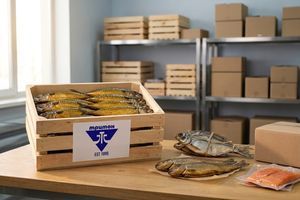
The brand “Triton” produces over 300 items of fish products of its own making: dried fish, salted fish and fish snacks. You can order it with Nova Poshta delivery or buy it at our branded stores.
What to serve with fish and beer
A fish snack comes into its own in the company of simple accompaniments. Dried and salted fish go with fresh rye bread, boiled new potatoes, green onions, lemon wedges and neutral sauces based on sour cream or mustard. Smoked fish is served with fresh vegetables, marinated gherkins and rye croutons. Dried and smoked fish are best served at room temperature, while small salted fish are best chilled.
To put together a fish platter for beer, combine several types and textures: something salty (herring, sprat), something dense and dried (goby, bream), something smoky and smoked (mackerel) and a dry snack (strips, squid). As a rough guide, allow 80–120 g of fish per person. Do not mix too many bold flavours on one plate — two or three types are usually enough so as not to overpower the taste of the beer.
Is fish with beer good for you
Dried and salted fish are primarily protein, and fatty species (herring, mackerel, sardines, Baltic herring) are also a source of omega-3. At the same time, the main caveat is salt. Drying concentrates not only protein but also salt: heavily salted dried fish can contain a great deal of sodium (for example, dried salted cod — about 7000 mg of sodium, that is, almost 17–18 g of salt per 100 g; this is an extreme example, ordinary snacks contain less salt). For comparison: the WHO advises adults to consume less than 5 g of salt per day (about 2000 mg of sodium), while average consumption worldwide is more than twice that. So fish with beer should be eaten in moderation, especially by those advised to limit salt. A snack portion is usually much smaller than 100 g, so this is about common sense rather than a ban. These are general dietary recommendations, not medical advice.
Separately on safety: fatty marine fish (mackerel, herring, sardines, anchovy) must be kept cold. If the temperature is not maintained, histamine can build up in it — the cause of so-called scombroid poisoning; it does not disappear after salting, smoking or freezing. So the main guarantee is fresh raw material and an unbroken cold chain, ensured by a conscientious producer.
How to store fish for beer
- Store dried fish in a cool, dry place, ideally wrapped in paper or cloth, with access to air. In an airtight bag it goes mouldy.
- Keep salted and smoked fish in the refrigerator, vacuum-sealed or in a container.
- Fish snacks keep in closed packaging at room temperature.
The exact shelf life is always stated on the packaging — rely on that first and foremost.
Frequently asked questions
Which fish goes best with beer?
Why does salted fish go so well with beer?
How does dried fish differ from sun-dried?
How to store dried fish?
Is there a lot of salt in fish for beer?
What to serve with fish and beer?
Summary
Fish with beer is not just roach. Dried, salted, snacks and smoked offer different flavours for different beers: light beer loves salted and dried fish, dark beer loves smoky smoked fish, and wheat beer goes well with fatty fish. Behind this lies simple gastronomy: salt softens bitterness, and carbonation cuts fat. Take your cue from the type of beer and your own taste, do not forget about moderation with salt, and choose quality from a trusted producer.