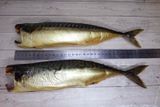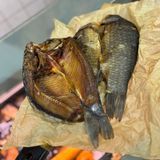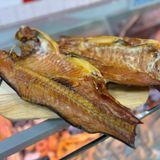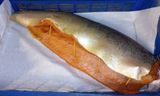
Cold smoking and hot smoking are two different ways of preparing fish, and they give very different results in taste, texture and shelf life. Buyers often confuse the two or choose at random. Below we explain the difference in plain terms, show which fish suits each method, and how to store the finished product. This guide was prepared by the team at Triton, a fish producer operating since 1993.
What is cold smoking
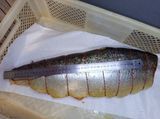
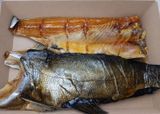
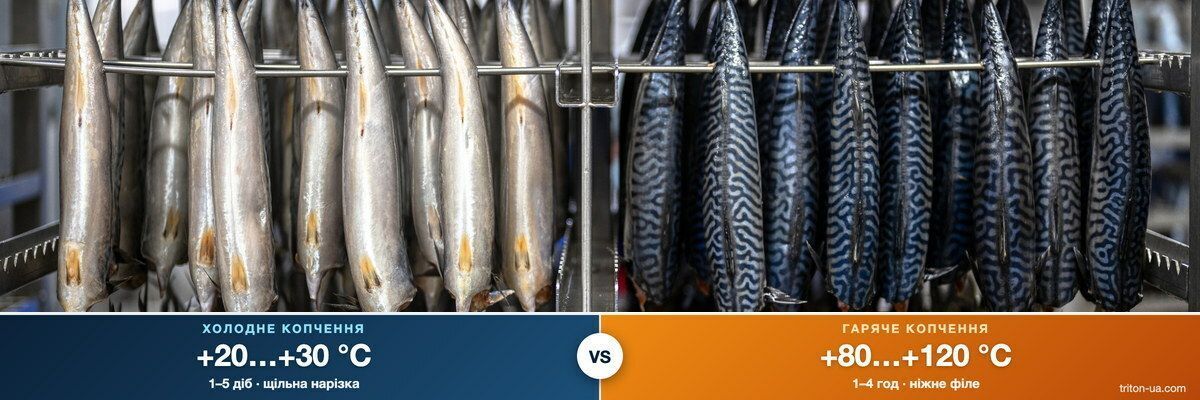
Cold smoking treats fish with smoke at a low temperature, roughly +20…+30 °C, over 1–5 days. The fish is salted first, then slowly absorbs the smoke. No high heat is applied, so the fish is not cooked through: it stays firm and is easy to slice thinly. The flavour is delicate, with a pronounced smoky aroma.
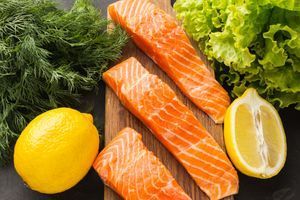
This method is usually used for premium red fish: salmon, trout, mackerel loin (balyk) and salmon belly (tesha). Thanks to salting and low moisture, cold smoked fish keeps longer, which is why it is often chosen for festive platters and slicing.
What is hot smoking
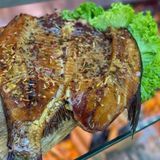
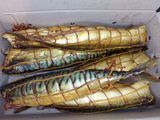
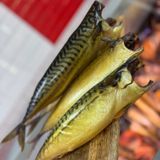
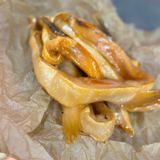
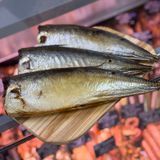
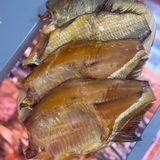
Hot smoking is done at a high temperature, roughly +80…+120 °C, over 1–4 hours. The fish is smoked and heat-treated at the same time, essentially baked in smoke. The result is tender, juicy flesh that comes away from the bone easily. This fish is fully ready to eat straight after smoking.
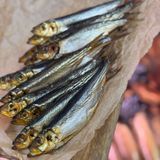
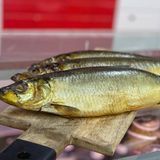
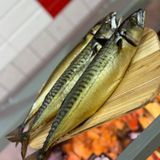
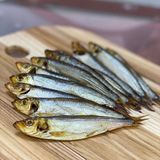
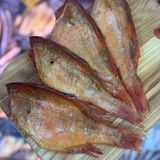
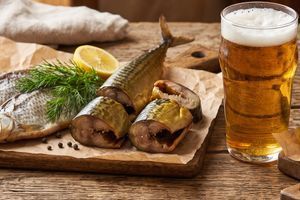
Hot smoking suits oilier, more affordable fish: mackerel, sea bass, horse mackerel, herring and blue whiting. Because of higher moisture and shorter salting, its shelf life is shorter than that of cold smoked fish.
Cold vs hot smoking: comparison table
| Parameter | Cold smoking | Hot smoking |
|---|---|---|
| Smoke temperature | +20…+30 °C | +80…+120 °C |
| Smoking time | 1–5 days | 1–4 hours |
| Heat treatment | none, fish is not cooked | yes, fish is baked in smoke |
| Texture | firm, slices cleanly | tender, juicy, comes off the bone |
| Flavour | delicate, pronounced smoke | rich, like baked fish |
| Typical fish | salmon, trout, mackerel loin, salmon belly | mackerel, sea bass, horse mackerel, herring, blue whiting |
| Shelf life | longer | shorter |
| Typical price | higher (premium fish) | more affordable |
Which is healthier — cold or hot smoking
There is no single answer: the benefit depends on the quality of the raw material and on following the process correctly, not only on the method. A few points to keep in mind:
- In cold smoking the fish is not strongly heated, so it retains more vitamins, minerals and beneficial fats, including omega-3.
- In hot smoking, some nutrients are broken down by the high temperature. At the same time, heat treatment reduces the risks associated with raw fish.
- Any smoking involves salt and wood-combustion compounds, so smoked fish is best eaten in moderation, especially by people advised to limit salt.
What matters most is the quality of the raw material and adherence to the process at the production stage. Fish from a trusted producer is safer than a product of uncertain origin, regardless of the smoking method.
Which fish suits each method
The fish itself largely determines the smoking method. Cold smoking brings out the flavour of fine red fish. Thinly sliced salmon or trout holds its shape, which makes it ideal for sandwiches, canapés and festive platters. In the catalogue this is the cold smoked fish section.
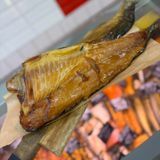
Hot smoking highlights the flavour of oily sea fish. Hot smoked mackerel, sea bass or horse mackerel is a meal in itself: simply serve it with potatoes, vegetables or fresh bread. This is the hot smoked fish section.
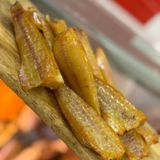
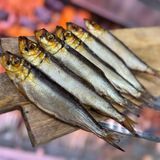
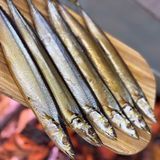
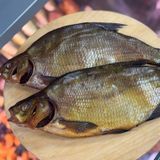
If you want a firmer texture and longer storage, consider dried (cured) fish as well.
How to store cold and hot smoked fish
Shelf life depends on the smoking method and the packaging. General guidelines:
- Hot smoked fish keeps in the fridge for a short time, usually up to 2–3 days: its higher moisture makes it spoil faster.
- Cold smoked fish, thanks to salting, keeps longer, roughly up to 7–10 days in the fridge.
- Vacuum packaging extends these periods, but once opened the fish should be eaten within a few days.
- For long-term storage, fish can be frozen: in the freezer it keeps for 1–2 months without significant loss of flavour.
The exact use-by date is always printed on the packaging, so follow that first. Store fish in the fridge separately from other products, ideally in a container that allows some airflow.
How to choose quality smoked fish
- 1 Smell. Natural smoking has a soft, woody aroma. A sharp chemical smell may indicate the use of “liquid smoke”. At the Triton production facility the fish is smoked over real alder, beech and apple woodchips, without liquid smoke or artificial flavourings.
- 2 Appearance. The surface is dry or slightly moist, with no sticky film or white slime. The colour is even and natural.
- 3 Packaging. Vacuum packaging protects the product, provided storage conditions and the date are respected.
- 4 Producer. It is safer to buy fish from a producer with its own production and an established reputation.
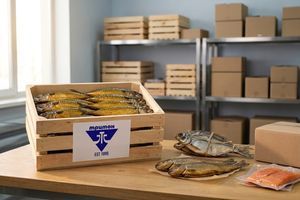
Triton produces over 300 fish products at its own production facility, including both cold and hot smoked fish. You can order with delivery via Nova Poshta across Ukraine or buy in our branded stores.
Frequently asked questions
Which is healthier — cold or hot smoked fish?
How long does smoked fish keep?
Can smoked fish be frozen?
Which fish should I choose for a festive platter?
How does the taste differ?
Summary
Cold and hot smoking produce different products for different occasions. Cold smoking suits delicatessen slicing and longer storage; hot smoking suits a ready-to-eat dish with a rich flavour. Choose based on the occasion, your taste, and how soon you plan to eat the fish. For quality, it is best to rely on a trusted producer.