





|
Quantity
|
Total
|
||
|
|
|||
Triton salted fish — matjes herring, fillet, iwashi sardine by classic technology
The TM «Triton» catalog has dozens of types of salted fish of our own production: classic matjes herring of gentle cure, marinated herring fillet in different dressings, salted iwashi sardine — a Far Eastern delicacy, mackerel, horse mackerel, iwashi herring. We cure by classic technology without artificial ripening accelerators, with a minimum of natural spices. Delivery by Nova Poshta to any city in Ukraine.
Salted fish is a classic of the Ukrainian table and one of the most popular categories in the Triton catalog. We have preserved the traditional curing technology from the Soviet school of technologists: slow cold curing for 5–7 days at low temperatures, minimum salt, only natural spices. That is why our matjes herring has tender, not over-salted flesh, a delicate flavor and an expressive aroma — the way the older generation remembers it.
Types of salted fish in the catalog
The category covers both classic «grandmother's» items and gentle-cure delicacy types.
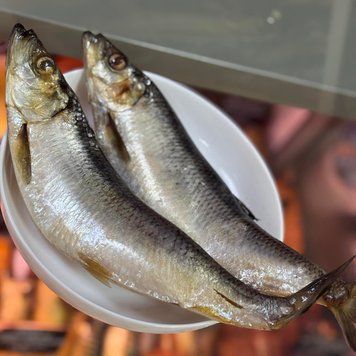
Matjes herring
The flagship of the category is matjes herring headless skinless gutted. This is young Atlantic herring of gentle cure, caught before spawning, when it has maximum fat and tenderness. Curing lasts 5–7 days at +2…+6 °C with a minimum amount of salt — this is the secret of the tender delicacy flavor. Available in packaging from 200 g to 1 kg, with different processing methods: headless skinless gutted, whole, carcass.
Marinated herring fillet
Marinated herring fillet — a product without bones and skin, ready to serve. The catalog has fillet in sunflower oil, in wine marinade, with mustard, with dill, with spices, with onion. This is a ready-made appetizer for sandwiches, canapes, holiday tables. Convenient packaging in plastic containers or glass jars.
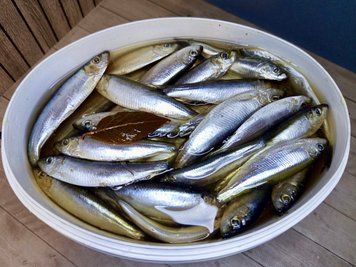
Salted iwashi sardine
Salted iwashi sardine is a delicacy of Far Eastern cuisine. A small fatty fish of the herring family with tender flesh, thin bones and expressive flavor. Grown and caught in the Pacific Ocean near Japan, Kamchatka and the Kuril Islands. Salted by the traditional method — in barrels with natural salt and spices. Differs from regular sardine by a softer flavor and higher Omega-3 content.
Salted mackerel and horse mackerel
Salted Atlantic mackerel is a fatty fish with a characteristic sea flavor. Salted horse mackerel is lean, with white dense flesh. Both types are for those who love a more expressive «fishy» flavor than herring. Served sliced with potatoes, in salads, on sandwiches with black bread.
Salmon delicacies and other types
Salted salmon in different variants — fillet, slices, belly. Salted salmon sub-skin meat with spicy marinade is a rare delicacy. Salted taran and vobla — for fans of traditional Ukrainian cuisine.
What is matjes and why is it a special product
The word «matjes» comes from the Dutch «maatjes» — «girl», and means young herring before spawning. These are not just words: the choice of young herring is critically important for the flavor.
- Catch period. Young herring is caught in spring — early summer, before it starts spawning. During this period, it has maximum fat (up to 25%) and minimum bones.
- Gentle curing. Unlike classic salted fish, matjes is cured at low temperatures for 5–7 days with a small amount of salt (3–5%, versus 8–12% in regular herring). This preserves the natural tenderness of the flesh.
- Natural spices. Bay leaf, peppercorns, cloves, dill, onion. Without artificial accelerators and flavorings.
- Texture. Tender, buttery, easily separates from the bones. Unlike regular herring, does not require lengthy processing before serving.
- Purpose. Thanks to the delicate flavor, matjes is the ideal base for canapes, holiday slices, fish platters. In everyday life — for sandwiches and simple appetizers.
How we salt Triton fish
The curing technology at our production in Kamianske is classic, without shortcuts.
- Raw materials. Atlantic herring, Far Eastern sardine, Pacific mackerel from verified suppliers. Frozen fish is defrosted naturally, without water baths.
- Sorting. Each batch is sorted by size, age, fat content. Only young herring before spawning goes to matjes.
- Curing. Dry or brine method at low temperatures (+2…+6 °C) for 5–14 days depending on the type. Only large-crystal sea salt.
- Spices. Bay leaf, peppercorns, cloves, nutmeg, dill, onion. Without artificial additives.
- Maturation. After primary curing, the fish «matures» in refrigerators for 2–5 days — the flavor balances out and acquires fullness.
- Quality control. Each batch is checked — organoleptic, microbiology, salt level (should not exceed 5–6% for matjes).
- Packaging. Vacuum for long-term storage, glass jars with dressing for fillet and preserves, thermoform for slices.
How to choose quality salted fish
- Flesh color. Natural — for matjes herring silver-gray to pink-gray, for sardine — silver-blue, for mackerel — light gray with a bluish tint. A yellowish shade is a sign of fat oxidation.
- Texture. Springy, not «runny». When pressed with a finger, the surface should return to its original state.
- Smell. Expressive fishy with notes of sea water. Without sour, ammonia or rotten shades.
- Brine (for fish in dressing). Transparent or slightly cloudy (from spices). Cloudy with flakes is a sign of storage violation.
- Size and age (for matjes). Young herring is small (15–22 cm), without developed sexual organs inside. This is a sign of proper catch before spawning.
- Manufacturer. Look for brands with their own fish workshop and transparent recipe. Imported herring repackaged under a Ukrainian brand is less reliable quality.
Why buyers choose Triton salted fish
- 1 Gentle classic curing. We do not over-salt, we do not accelerate the process. 5–7 days of cold curing — and this is what gives the delicate flavor of matjes.
- 2 Only young herring for matjes. We take fish before spawning, when it has maximum fat. This is a fundamental position.
- 3 Natural spices without substitutes. Bay, pepper, cloves, dill. Without artificial flavorings and ripening accelerators.
- 4 Dozens of types. From classic matjes to delicacy iwashi, from fillet in wine marinade to spicy mackerel. You'll find something for any occasion.
- 5 Convenient packaging. Small 200 g jars, medium 500 g, large 1 kg. For a single serving or for a family table — choose the format.
- 6 Delivery with cold. Delicacy products are packed in thermal envelopes with ice packs — arriving fresh at any Nova Poshta branch.
How to store and serve salted fish
Storage. In the refrigerator at +2…+6 °C. In vacuum — up to 14 days. After opening — 3–7 days in glassware under film. If the fish was in dressing, add a little oil when transferring to your container to prevent drying.
Serving. Before serving, take the fish out of the refrigerator for 10–15 minutes — the flavor opens up more fully. Classic pairings:
- Matjes herring with jacket potatoes and scallion — a traditional Ukrainian dish
- Herring «under a fur coat» — a festive salad with beets, carrots, potatoes and mayonnaise
- Canapes with matjes herring — on Borodinsky bread with butter, marinated gherkin, olive
- Iwashi sardine — with mashed potatoes, on sandwiches with scallion and oil, in salads
- Salted mackerel — sliced with lemon and beer, in classic «Olivier» salad instead of meat
- Herring fillet in wine marinade — in tartlets, on canapes, in salads with apple and egg
Salted fish delivery by Nova Poshta
We ship orders with salted fish by Nova Poshta daily. Delicacy products are packed in vacuum or hermetic containers with dressing, additionally in thermal envelopes with ice packs that hold the temperature at +2…+6 °C for 24–48 hours of transportation. Delivery is possible to any branch or parcel locker — Kyiv, Dnipro, Lviv, Odesa, Kharkiv, Zaporizhzhia and other cities of Ukraine.
Frequently asked questions about Triton salted fish
What is matjes herring and how does it differ from regular salted?
Matjes is a special technology of gentle curing of young herring. Fish caught before it began spawning is taken (usually spring — early summer), when it has maximum fat. Curing takes place at low temperatures (+2…+6 °C) for 5–7 days with a minimum amount of salt (3–5%) and natural spices. The result is tender, not over-salted fish with a delicate flavor, expressive aroma and soft texture. This is the ideal base for canapes, holiday slices and sandwiches.
What is iwashi sardine and what is special about it?
Iwashi (Far Eastern sardine) is a small fatty fish of the herring family, caught in the Pacific Ocean near Japan, Kamchatka and the Kuril Islands. Has tender flesh, thin bones, expressive fishy flavor with notes of sea water. Salted by the traditional method — in barrels with natural salt and spices. Differs from regular sardines by a softer, more delicate flavor and higher Omega-3 content.
How long does salted fish keep after opening?
In the refrigerator at +2…+6 °C: matjes herring and herring fillet in vacuum — up to 14 days, after opening — 3–5 days in glassware under film with a small amount of oil. Salted iwashi sardine — 7–10 days. Salted mackerel — 5–7 days. The exact storage conditions are indicated on the package. Do not leave salted fish at room temperature for more than 1–2 hours.
How to prepare fillet from salted herring for serving?
If the herring is filleted, take it out of the packaging and slice it across into 1–2 cm pieces. Arrange on a plate. Add onion rings, dill, olives, lemon, in some cases — cream mustard or apple. Before serving, keep it for 10–15 minutes at room temperature for flavor opening. If the herring is whole — first cut along, remove the backbone, then slice the fillet into pieces.
Can salted fish be frozen?
Not recommended. When frozen and thawed, the structure of salted herring and sardine changes — the flesh becomes watery, loses its characteristic tender texture. If you still need to freeze (for example, a large batch), do it in vacuum packaging and defrost gradually in the refrigerator. Frozen fish, on the contrary, is intended specifically for storage in the freezer.
What are the classic pairings with matjes herring?
Classic serving: 1) With jacket potatoes and scallion — a traditional Ukrainian dish. 2) On canapes with Borodinsky bread and butter — a festive appetizer. 3) Herring «under a fur coat» — a festive salad with beets, carrots, potatoes and mayonnaise. 4) With apple, onion and oil — a cold appetizer. 5) With marinated gherkins and black bread — an appetizer with vodka. Thanks to its delicate flavor, matjes pairs well with most classic recipes.
How is salted fish packed for delivery by Nova Poshta?
Salted fish is a delicacy product that requires controlled temperature. We pack in vacuum or hermetic containers with brine, additionally in thermal envelopes with ice packs that hold +2…+6 °C for 24–48 hours of transportation. Orders placed before 14:00 are shipped the same day. This guarantees that the herring, sardine or mackerel arrives fresh at any branch in Ukraine.