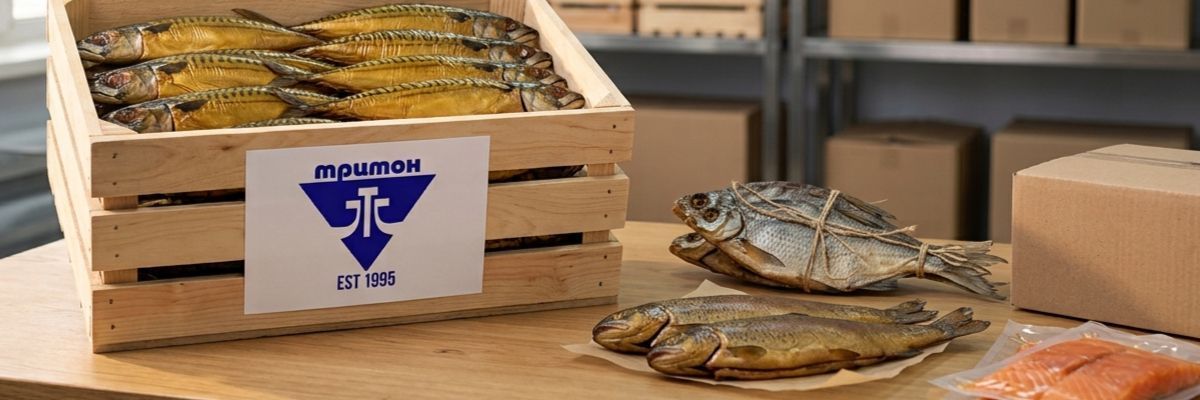
In Kamianske we salt, smoke and dry fish, make preserves and ship fish and meat products from here to retail chains, beer shops, village stores and wholesale depots in several regions. A shop that buys fish wholesale from the producer should know how it is made: taste, texture and how long the product lasts on the counter depend on how the fish was salted, smoked or dried, how it was packed and how it travelled. The same things determine how the goods should be received and stored.
Where the fish comes from
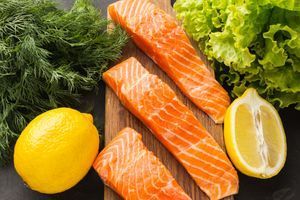
Our fish arrives frozen from Norway, Scotland, the USA, Spain, Chile and Estonia, and we buy part of the raw material from Ukrainian suppliers. Some fish goes on sale frozen, without processing. For cafés and restaurants that cook fish themselves, the frozen fish section has salmon, trout, hake, pollock and herring, salmon, trout and tuna steaks, and salmon mince. The rest goes to the plant, where it becomes salted, smoked and dried fish, preserves, fish snacks and sausages.
Salting and salted fish
Processing almost always starts with salting. Salt gives fish its flavour and helps it keep, and during smoking or drying it holds moisture in the flesh. How long the fish stays in salt depends on its size and fat content, usually two to five days. There is no room for error here, because under-salted fish spoils quickly and over-salted fish loses its taste.
Fish is salted in different ways, and the method shapes the product. Dry salting means covering the fish with salt, spiced salting adds spices to the salt, and lightly salted fish stays in salt for a shorter time so the flesh remains tender. Some fish is already a finished product at this stage: dry-salted sprat, sardine and anchovy, spiced Baltic herring and horse mackerel, and salted and lightly salted herring are sold in the salted fish category.
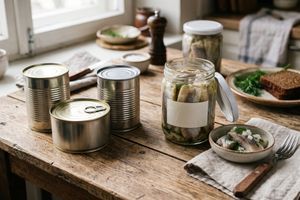
Lightly salted fish and seafood in oil, marinade or sauce become preserves. These are herring fillets and pieces, matjes, mussels and seafood mix. Preserves are not sterilised, so they are stored and transported only under refrigeration. We explained how they differ from canned fish in our article on preserves and canned fish.
Cold and hot smoking
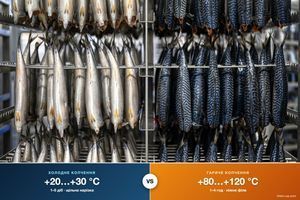
Fish that goes on to smoking after salting is smoked with natural wood smoke from a blend of sawdust, using either the cold or the hot method. In cold smoking the temperature stays at or below 25 °C, and the process takes 12 to 18 hours. The fish does not cook; it slowly dries and takes on the smoke, so the flesh comes out firm and slices thinly. This is how we smoke salmon, mackerel, herring, bream, Baltic herring and capelin.
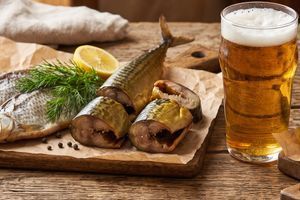
Hot smoking runs at 70 °C or higher for at least 35 minutes, long enough for the fish to be both smoked and cooked. The flesh is juicy and comes away from the bone easily. We hot-smoke mackerel, horse mackerel, hake, bream and silver carp.
Smoked fish comes whole, headless, split, in steaks or as fillets, and salmon gives several products at once: fillet pieces and slices, lightly salted and smoked bellies, hot- and cold-smoked backbones, trimmings for preserves and mince. Each item's size grade is in its name, for example mackerel of 300 to 500 g or horse mackerel of 500 to 900 g, so a shop knows in advance what fish it will get.
The difference between the two methods also matters for storage. Hot-smoked fish holds more moisture, so it is stored frozen and thawed at the shop in batches for sale. Cold-smoked fish is kept cold, at around zero. We wrote about the taste and texture of both in our article on cold and hot smoked fish.
Dried fish and fish snacks
Drying also starts with salting, but instead of smoking, the fish is then dried slowly at about 22 °C. It gradually loses moisture and becomes firm, it can be eaten without cooking, and it keeps for a long time. Most fish prepared this way is the kind people buy to go with beer: bream, roach, silver bream, zander, sabrefish, smelt and moonfish. We sell dried fish whole, gutted or cleaned, and there is also a ready 150 g beer assortment. Dried fish dislikes damp and heat: in humid air it absorbs moisture and in warmth its fat turns rancid, so both in the warehouse and in the shop it is kept in a cold, dry place out of the sun.
Semi-dried fish is dried for a shorter time and stays soft and juicy. In our range this is horse mackerel and yukola made from salmon and coho. For shops that sell beer snacks we also make fish snacks, such as dried fish sticks and roe snacks, as well as fish sausages from mackerel, salmon and squid and a dried tuna sausage.
Smoked poultry, sausages and other meat products
Alongside fish we produce meat products, and the closest to fish smoking here is cooked and smoked poultry. Chicken thighs, drumsticks, wings, breast and leg quarters are cooked and smoked, so they reach the customer fully ready to eat. We ship cooked and smoked poultry in boxes of separate packs, mostly half a kilo each. This suits selling by weight: the shop opens one pack while the rest stay sealed in the fridge.
Besides poultry, the sausage products section has semi-smoked and cooked sausages, frankfurters, thick sausages, chicken brawn, pork head cheese and liver pâté. The range also includes meat snacks, meaning chips and jerky, and frozen pelmeni. So a shop can order fish and meat products wholesale from one supplier and receive them together.
Packing and delivery
We ship most products by weight. Smoked and dried fish travels in boxes of 1 to 4 kg, salted fish and preserves in tubs and trays, and dry-salted sprat in wooden boxes. For shelves there is pre-packed vacuum-packed fish, mostly 100 to 200 g: sliced salmon and trout, bream steaks, cold-smoked sprat and capelin. Our packaging is certified and meets sanitary requirements, and reusable crates are washed in automatic washers.
Each product group needs its own conditions on the road. Hot-smoked fish, frozen fish and pelmeni travel frozen; preserves, salted fish, smoked poultry and sausages travel chilled; and dried fish needs protection from moisture as well as cold. That is why we deliver across the regions of Ukraine in our own refrigerated vehicles, which keep the right temperature along the whole route. Our fish and meat products are sold by shops in Dnipro, Kamianske, Poltava, Kropyvnytskyi and Zaporizhzhia and in towns and villages of the Dnipropetrovsk region; the full list is on our partners page. If your shop is far from our routes, some items can be sent by Nova Poshta.
How to order wholesale
Current prices are in the price list. Wholesale orders are handled by the sales department, whose phone and email are on the Contacts page. All our fish products, both processed and frozen, come with the required accompanying documents. You can plan your first order in advance using the online catalogue, which shows how every item is packed, and for partners in other countries we offer export items in vacuum packaging. You can taste our products before the first delivery at Triton's own shops in Kamianske; the addresses are on the Where to try? page.